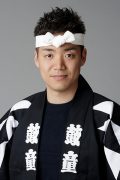
“Sharing Taiko. Bonding Through Taiko.” by Taiyo Onoda
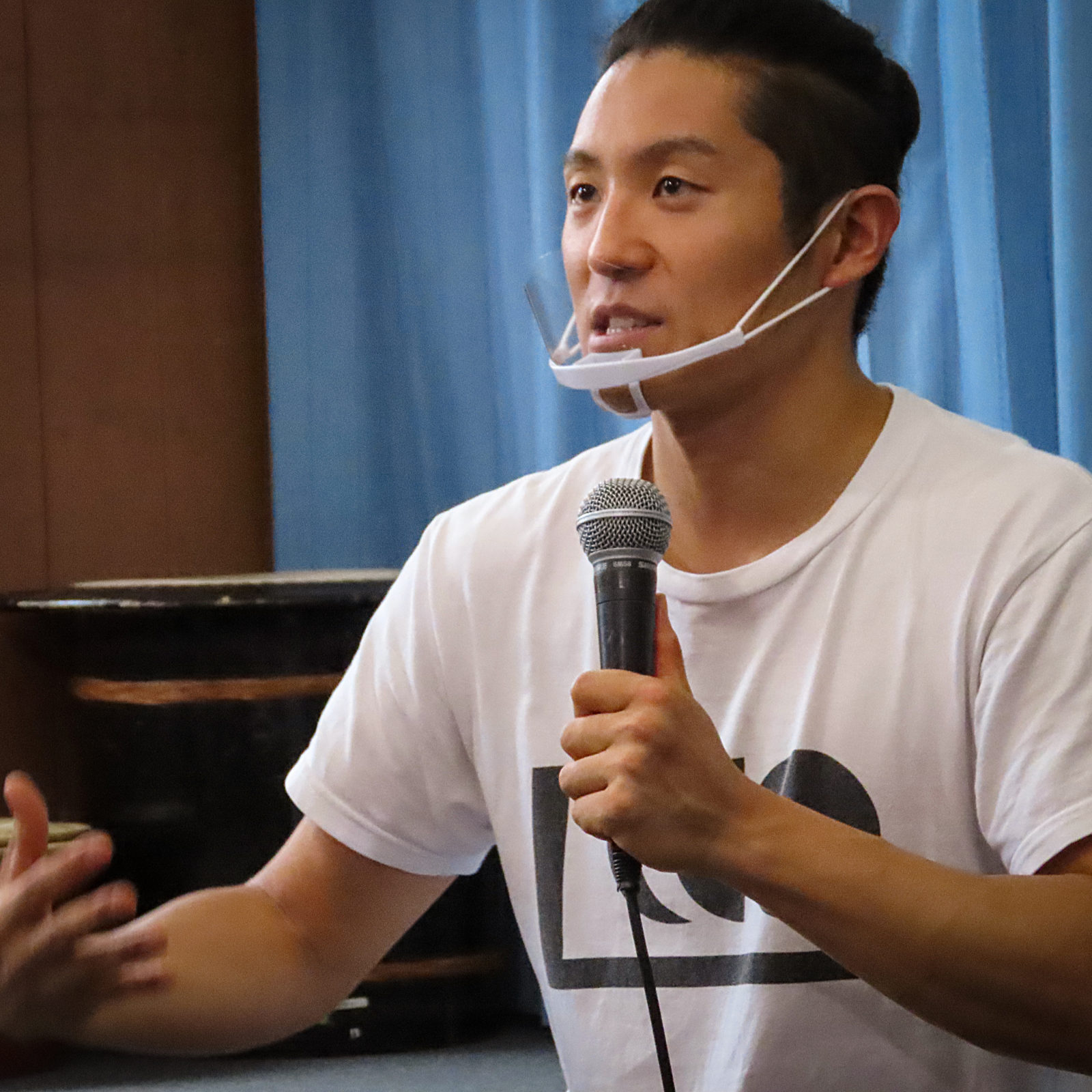
Almost a year has passed since the launch of Kodo Taiko School. This new initiative is an online school where Kodo performers share the skills and knowledge the ensemble has developed over the years. We conducted a trial course with Cohort 0 in 2021, and currently we are heading into the final lessons of the Cohort 1 course.

I initially felt out of place when I found myself in a teaching position at this early stage of my performing career. Already, I can honestly say that facilitating these courses has become one of the richest learning experiences of my lifetime.
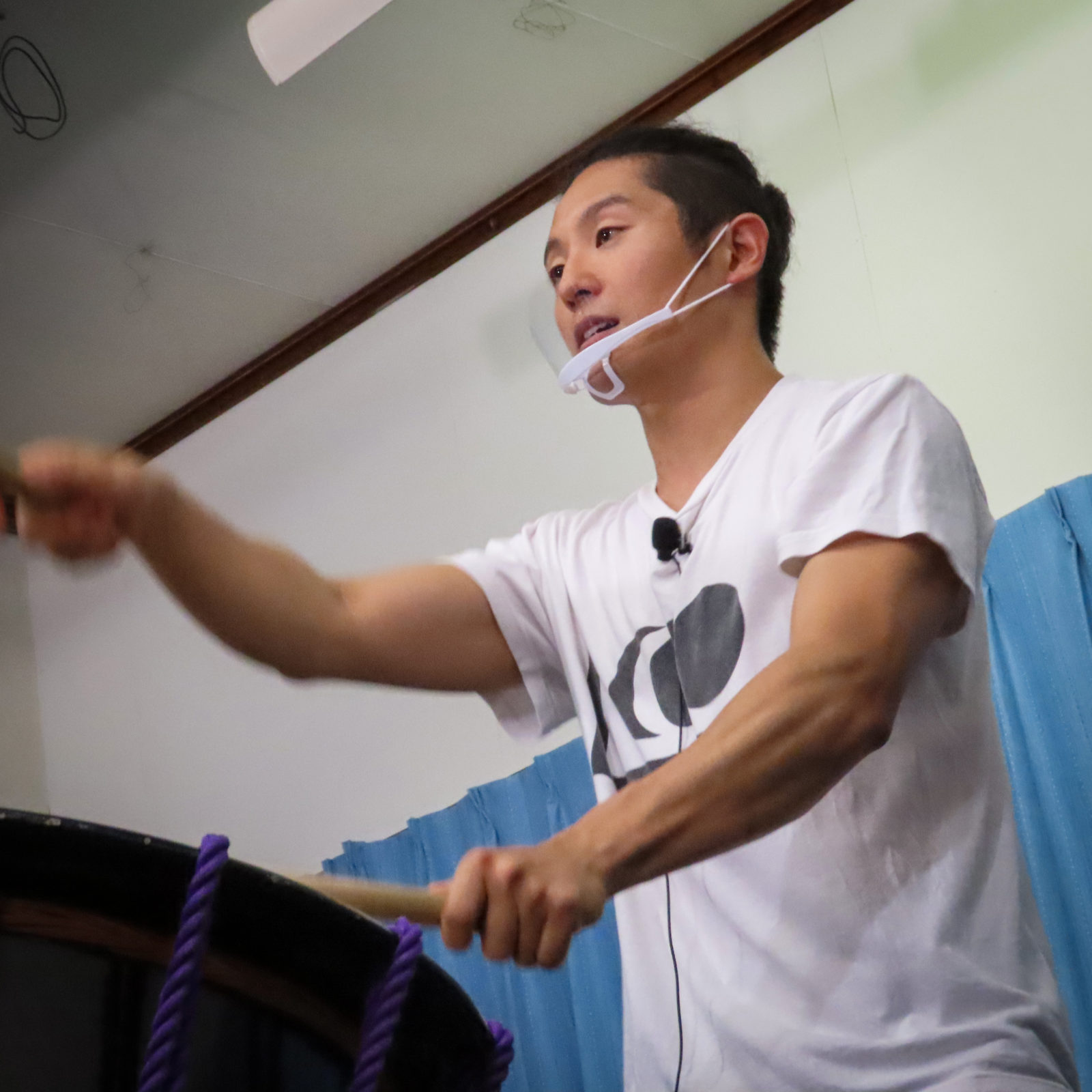
When the trial course began, it took a lot of time and effort for the Kodo Taiko School instructors, who are all Kodo performers, to come up with clear ways to explain what we experienced and gained through our training at Kodo Apprentice Centre. It’s challenging to put into words what we learned back then, and what we think and feel as performers now. Kodo doesn’t have a uniform kata (style of taiko playing, or set form), which made this challenge even more complex. At Kodo, we all strive to create the best sound possible. We acknowledge that everyone’s body is different, so we always keep in mind that how we play differs from person to person.

The instructor team approached this particular challenge by surveying a number of Kodo performers, and noting the similarities between us. In particular, we sought guidance from Eiichi Saito, the pioneer of Kodo-style workshops, and from Tomohiro Mitome, who frequently teaches taiko players within Kodo and from other teams. We also talked to various guest instructors who teach at Kodo Apprentice Centre and asked for their advice.

Our conclusion was that the Kodo method could be defined as the act of playing taiko in the most natural state possible. As Kodo members, it’s an individual quest to find our most natural state and to create the best sound possible. We strive to do that through our daily training. 

Kodo Taiko School is a place where students can join us on that journey. Every lesson is led by a Kodo performer who explains things in their own unique way. Because we teach a course as a team, you get insight into a range of individual perspectives and approaches, all with the same end goal—achieving a natural state to create optimal sound. I think that’s one of the things that enriches our courses.
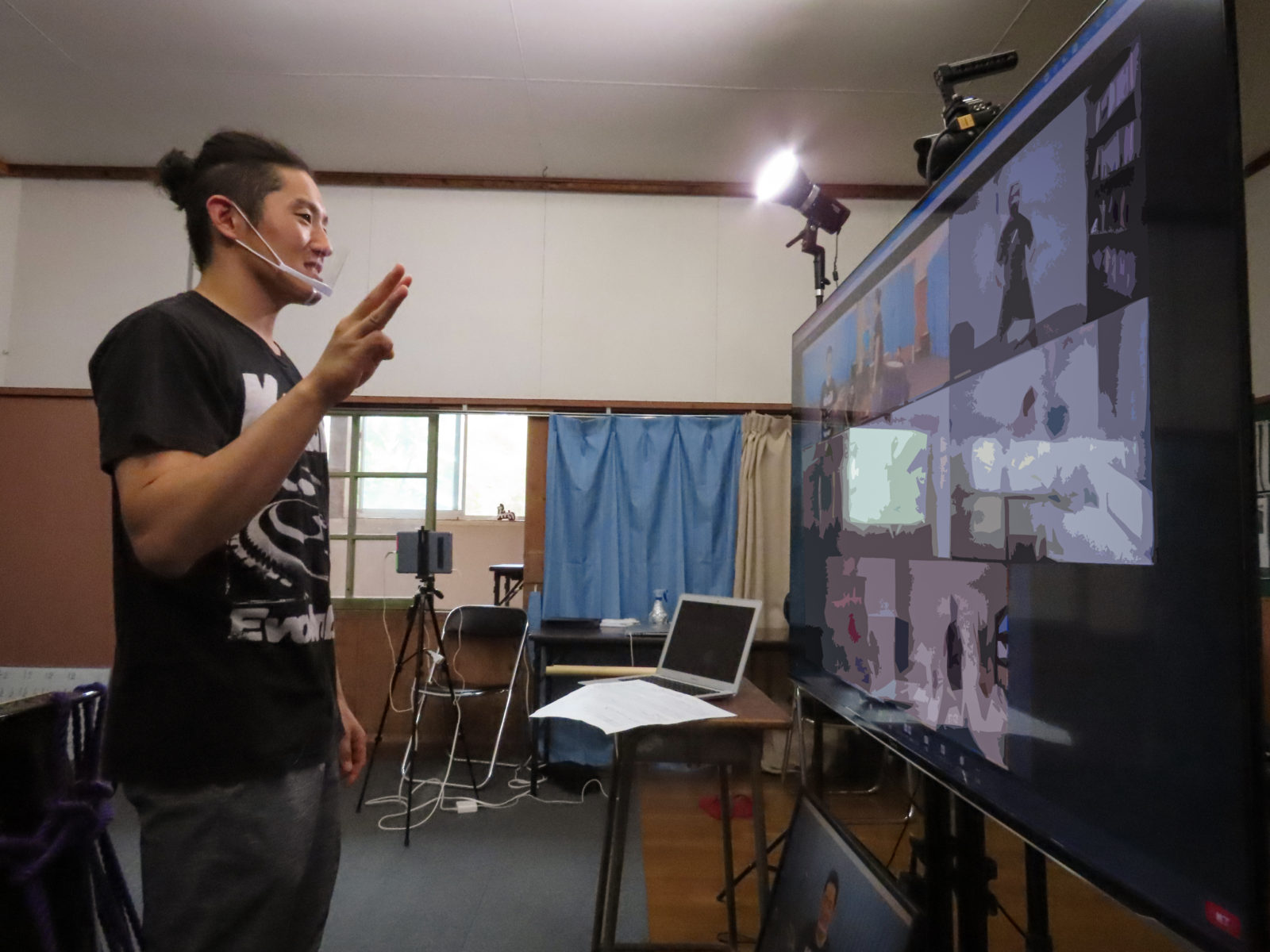
Teaching, in my own words.

I am a member of the instructing team, and I also double as an English interpreter for the lessons because I grew up in the United States. But I often struggle to find the right words. It’s hard to interpret Japanese terms and concepts that don’t have literal English translations, or will not make sense in English in a particular context. Especially on the spot.

For example, the first roadblock that every Japanese-English interpreter probably bumps into is “Yoroshiku onegai shimasu.” This common Japanese greeting can be literally translated into “best regards,” but in certain situations, it’ll mean “please share your knowledge and advice with us,” or “kindly do a favor for me,” or something else. 

Here’s another example. In Japanese, futokoro is a word that explains the space in front of your chest. But it’s more than a word; it’s a concept that changes depending on the activity you’re doing. So it’s different for martial arts, tea ceremony, and taiko. Trying to explain it in one word in English isn’t possible. I needed way more words each time. 

(Side Note: I wrote this blog in Japanese first without considering the difficulty of translating into English. The struggle is real…)

With each passing week, I learned how to explain things better. Interpreting for the senior members allowed me to process their thoughts in my mind twice; once in Japanese and again while I was searching for the right English. While listening to their explanations, I drew on my own knowledge and experiences to find the words I needed.
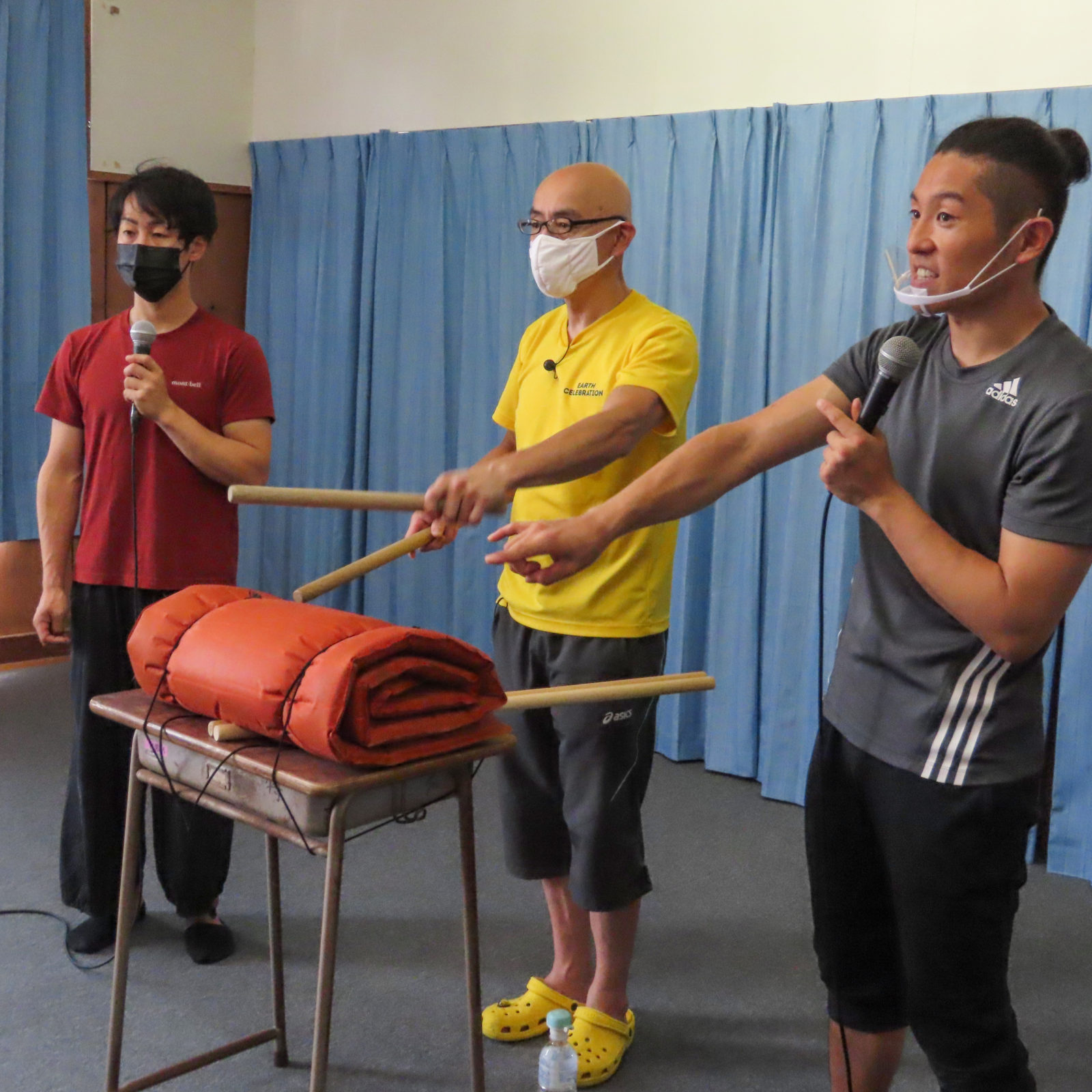
Interpreting for Cohort 0 Guest Instructor Eiichi Saito
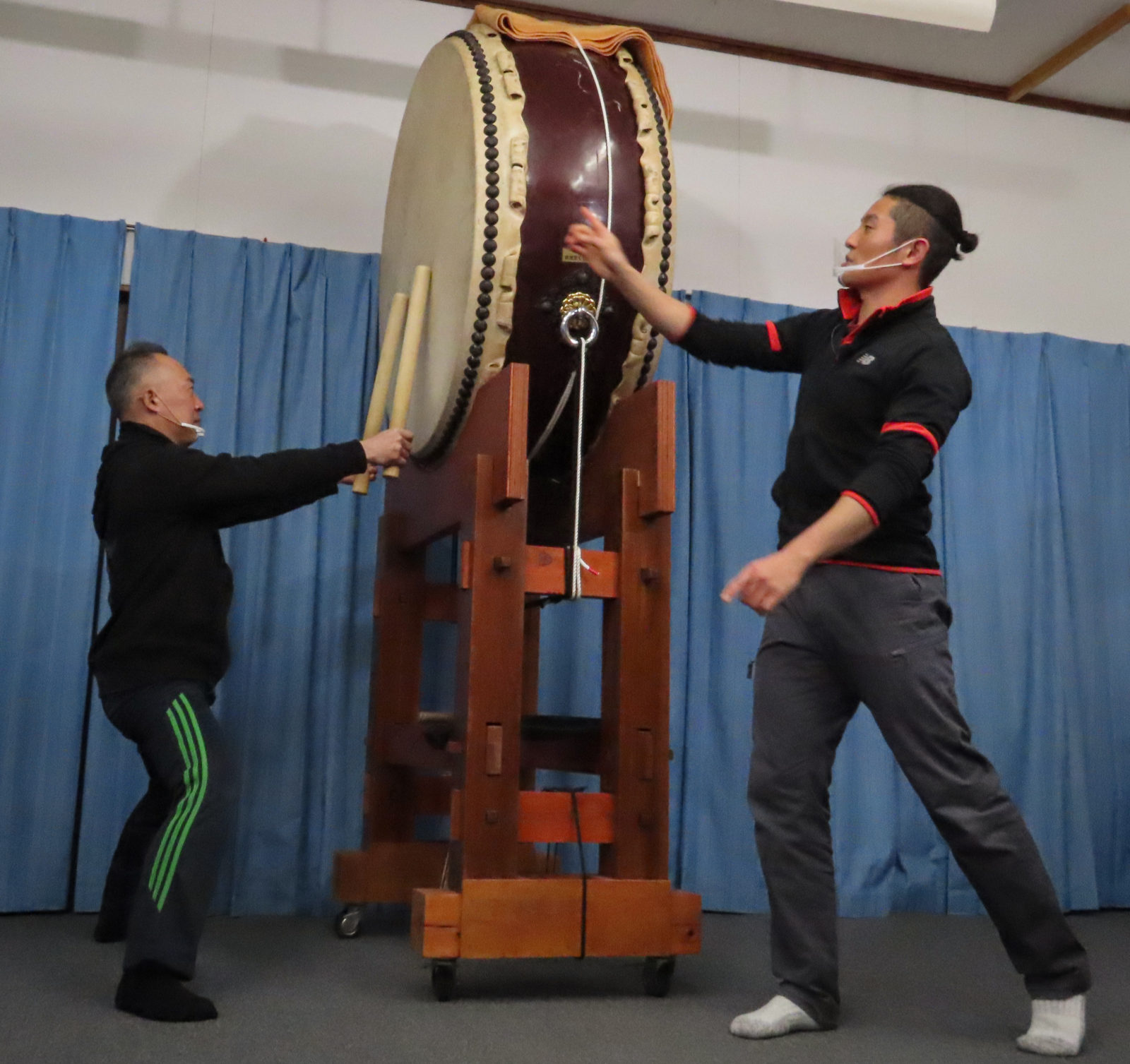
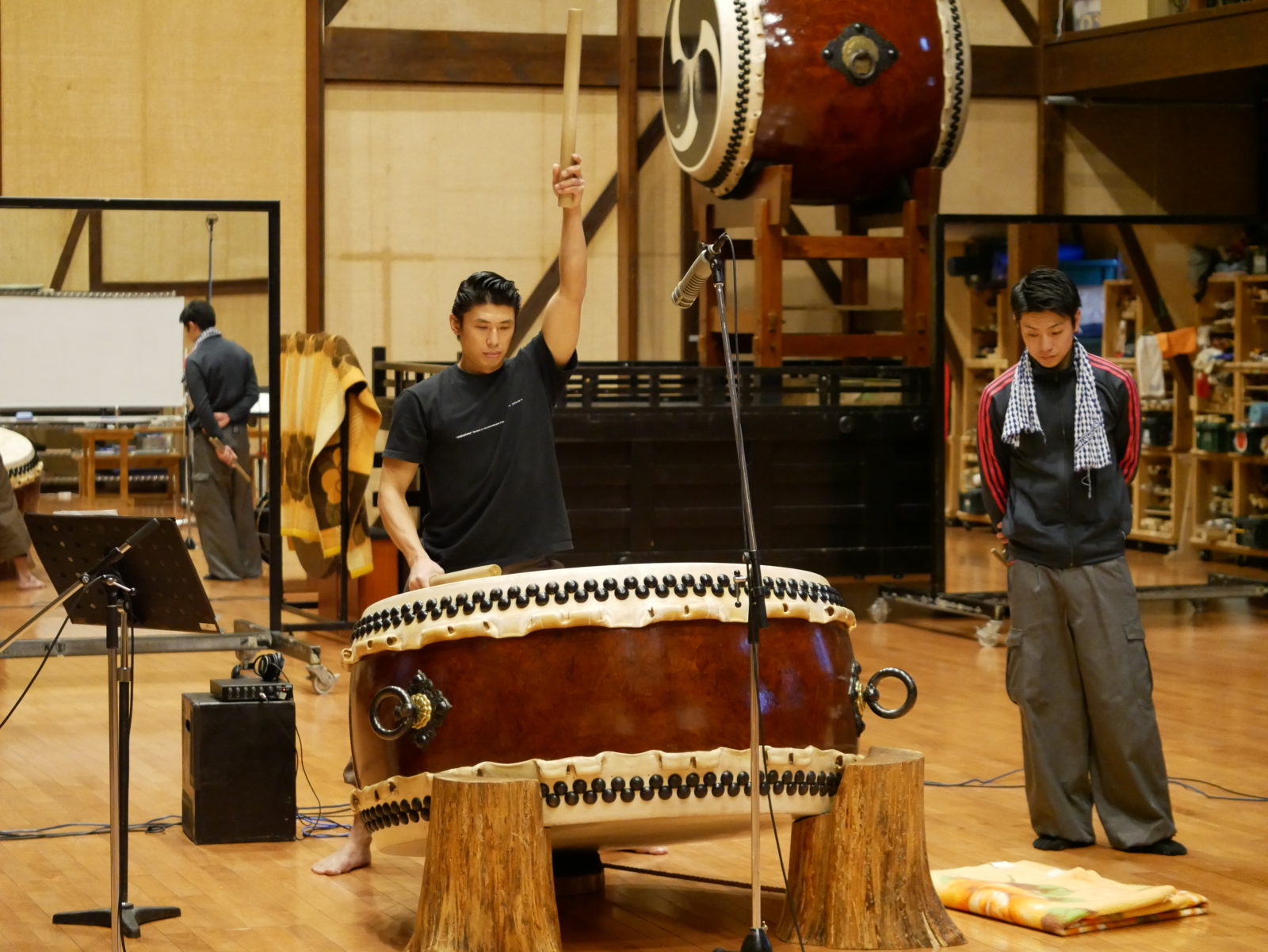
Interpreting for Cohort 1 Guest Instructor Tomohiro Mitome as he explains how to apply the fundamentals of taiko playing to Odaiko (big drum) playing.

But there were still things that I just couldn’t explain concisely. Not just while I was interpreting, but when I was teaching as well. I eventually realized that I had trouble explaining certain concepts, simply because I didn’t know enough about them. A wise man once said, “if you can’t explain something simply, you don’t understand it well enough.” This quote hit home. Lesson learned.
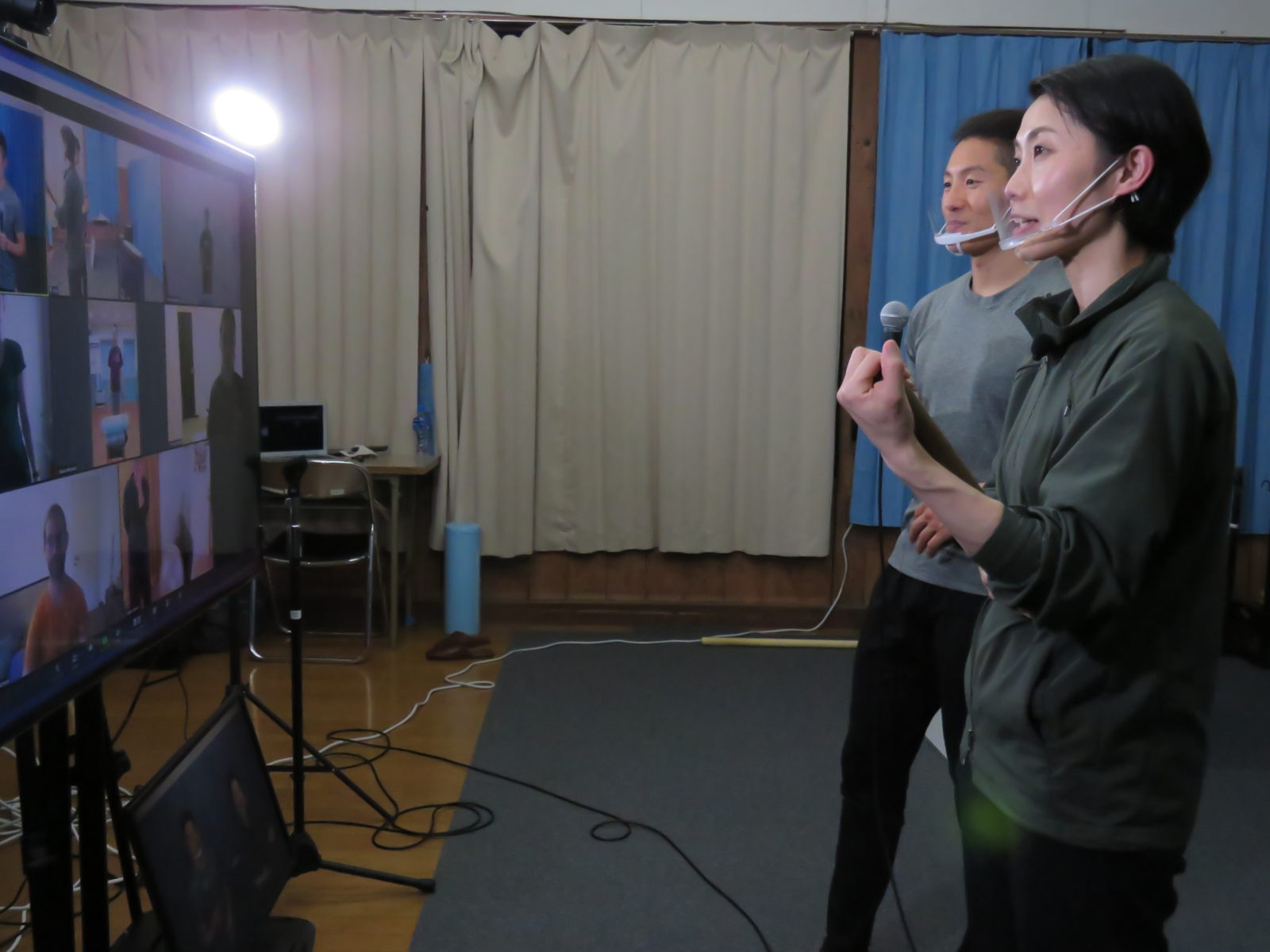
With Instructor Team Leader Yoshie Abe. We’re working hard to forge meaningful connections with all the students.
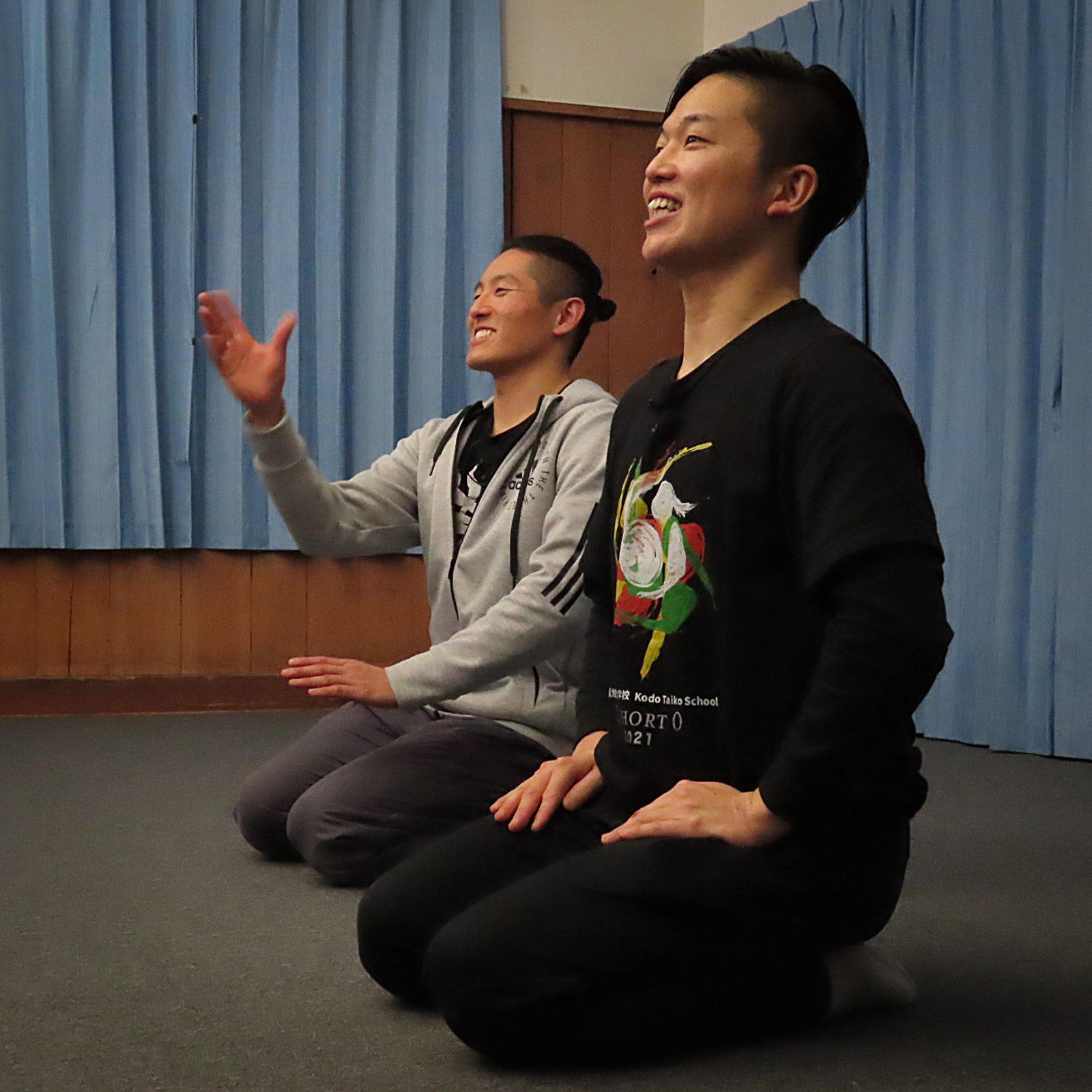
With Shogo Komatsuzaki, talking about physical conditioning. At Kodo Taiko School, all the instructors perform on the Kodo stage, so you get to hear practical advice from a performer’s point of view.

For me, getting to experience how the senior members approach and explain this art form firsthand is really inspiring. When I interpret for my fellow instructors, it feels like a VIP experience because I get the chance to go inside their head and take a peek at their way of life, through their eyes. I feel so lucky to have this chance.

This chance comes with a sense of responsibility. I believe it is my duty to share their experience as accurately as possible with taiko enthusiasts all around the world. 
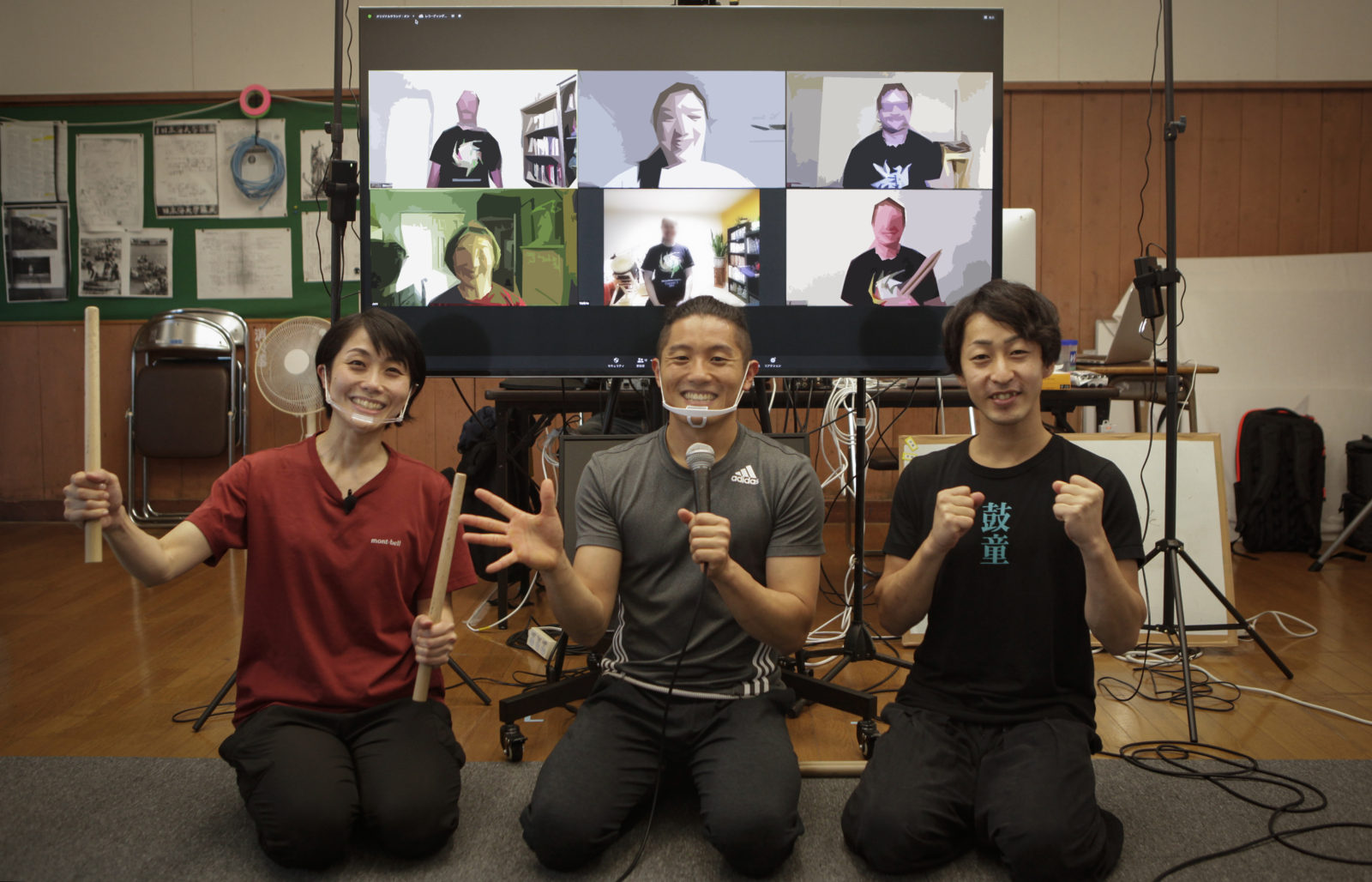
Yoshie Abe (left) and Jun Jidai (right) will be Cohort 2 instructors, too. Join them and participants from around the world! Cohort 2 starts in May 2022.

Cohort 2 of Kodo Taiko School will begin in May 2022. During this course, I am scheduled to be touring Japan, so I won’t be able to participate in the same way as I have to date. Instead, I’ll be on stage, giving it my all and making most of what I learned through Cohort 0 & 1. 

Kodo Taiko School alumni: I hope you’ll come to the theater so we can meet up in person. If you can join us, see you soon!
Kodo Taiko School future students: It will be one of the richest taiko experiences of your life, guaranteed. I’m looking forward to hearing how you get on!


Kodo Taiko School – Online Information Sessions (Pre-Cohort 2)
Kodo Taiko School Cohort 2

Kodo Taiko School

Reflecting on Our 2022 Europe Tour

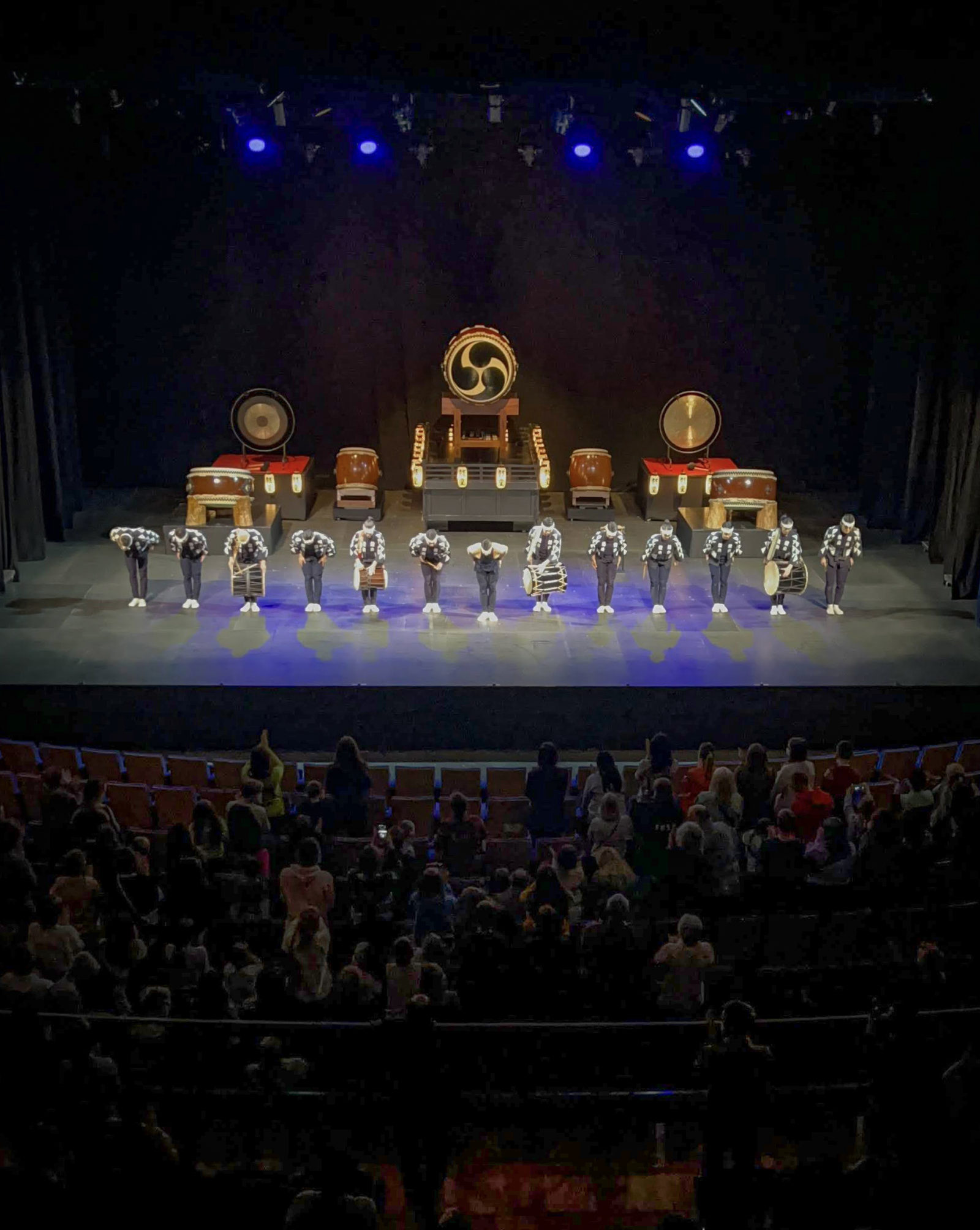
The finale of a special concert for refugees from Ukraine in Tallinn, Estonia, on Mar. 29, 2022

Takuro Susaki

The Europe tour cast and crew have returned to Japan.

It was a real joy for Kodo to have been able to welcome and delight so many people at the concert venues we visited across Europe. I sincerely thank everyone who attended our performances, along with the many people who gave their all to make our performances possible.

As many of you know, the cast and crew faced numerous difficulties touring during a pandemic, including situations like concert cancellations that had a huge, direct impact on our tour. In Estonia, we held a concert for refugees from Ukraine, where Kodo felt the close presence of a large number of people who had lost their homes and family due to war. In many ways, this tour shook the cast and crew to the core.

Now that they are safely home, we would like to use our blog as a space where the cast members of our Europe tour can unpack and share their thoughts. I want the entire Kodo Group to learn from their experiences and for us to explore and process their stories as a group. We will use these learnings together as we plan what we can and should do next.

Takuro Susaki
President
Kitamaesen Co., Ltd.


Ryotaro Leo Ikenaga

We have just got back to Japan safely after our two-month-long Europe tour.

Two years ago, our Europe tour was suddenly cut short when the COVID-19 pandemic escalated: we had to return to Japan, canceling the remainder of our performances. This time, we were touring during times of pandemic and war. While both tours were memorable in different ways, our 2022 tour was an experience that really shook each and every one of us to our core.

Prior to leaving Japan, we did not know what to expect; how many people would show up to our performances? However, much to our surprise, we were welcomed by a large, warm audience everywhere we went.

Since the pandemic started, we Kodo members have felt conflicted about our purpose in this world. Performing in front of a full house audience and hearing the words “Thank you for coming,” was truly reassuring for all of us.

What can we do as taiko performers to make this world a better place?

Tackling this question has been Kodo’s mission for over 40 years, and this tour reminded all of us that we must once again ask ourselves this very question.

Ryotaro Leo Ikenaga
Kodo “Tsuzumi” 2022 Europe Tour Cast Member

“Open Call for Hana Hachijo—WTC Version Submissions” by Chieko Kojima

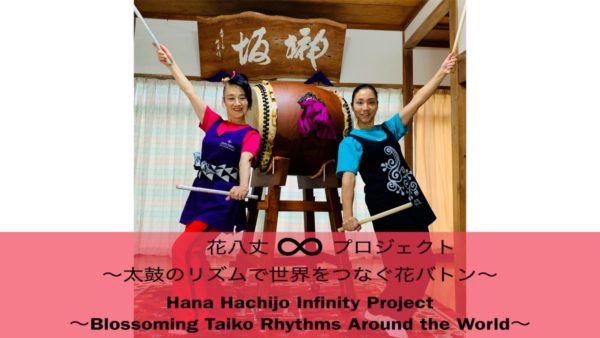
Hana Hachijo: Infinity Project
—Making Taiko Rhythms Bloom Like Flowers Around the World—
Open Call for Hana Hachijo—WTC Version
Submissions for Video Collaboration!
Submission Deadline: Extended to Nov. 9!


The inaugural World Taiko Conference (WTC) will be held in November this year. I decided to share my signature piece, Hana Hachijo, as part of this event. I created it 21 years ago, based on a traditional folk art, Hachijo Daiko, from Hachijo Island south of Tokyo. “Hana” means flower in Japanese, and my piece incorporates rhythms from Hachijo with dance-like movements that add beauty, grace, and color.

I have traveled the world with “Hana Hachijo,” sharing its seeds with many people to date. With each encounter, I hoped those seeds would one day bloom as a unique flower when each individual played their own rendition of Hana Hachijo.
To commemorate the first WTC in Japan, I would like to start a baton relay that connects our Hana Hachijo flowers around the world. Please play Hana Hachijo, share your rendition, and pass on the baton by using the hashtag #hanabaton. Let’s pass it right around the world!

Please submit a video of you playing “Hana Hachijo,” using the videos below as a guide. There are two versions: one without metronome clicks and one with metronome clicks.

We will compile all the videos we receive to create one collaborative “Hana Hachijo” video featuring everyone. We are going to submit this final video as an exhibition at Niigata Prefectural Cultural Festival in November. After it is shown at the festival, I will share the video on social media for everyone to enjoy. WTC and Kodo will share it, too.

I’m looking forward to receiving everyone’s “flower baton” videos! Thanks in advance for taking part!


*This collaborative video is scheduled to be shared on Nov. 18, 2020 on the Niigata Prefectural Cultural Festival “Niigata Stage Channel” on YouTube. 

Details about World Taiko Conference Song Submission:
https://en.wtctokyo.com/songsubmissions

“Making Taiko Music Become More Everyday Music” by Yuta Sumiyoshi

Making Taiko Music Become More Everyday Music

That’s what we had in mind when we launched this project, “The Heartbeat Laboratories.”

Even though many people know taiko from the music that accompanies Japanese festivals, and modern taiko performances, I think only a small number of people have heard the everyday sound of taiko.

For most Japanese people, taiko isn’t an everyday instrument.
I think that’s because people have stereotypes about taiko that they can’t push aside.

There’s “Japanese style background music,” which uses taiko and Japanese instruments. Many people think it only suits a particular type of scene, right?

In order to overturn that notion, we have to share a completely new genre of taiko music.

We can do that by not sticking to taiko alone, but by including Western instruments and electric instruments, and exploring a new ensemble beyond the limits of every type of music.

Some people may say, “That’s not taiko.”

To which I say, what do you think “taiko” is then?

For example, is it something composed in the Edo Period? Heian Period? Jomon Period?

Are you saying it’s taiko if it was created at a certain time?

And Kodo’s original instruments—Hibiki, Shime-jishi, and Kanade—they are Japanese drums, so are they “taiko”?

If you think about these questions and more, I think you’ll notice that the concept of taiko is more vague than you might think.

In every era to date, instruments have been continually improved to create the sound and musicality we want to conjure.
It’s the same for all instruments, not just taiko.

If people restrict the possibilities for taiko, by jumping to conclusions based on the fixed image they have of this instrument, then taiko music has no future.

That said, if we become bound by a Western sense of music, then we can’t escape from being labeled “Japanese style background music” either.

All we can do is keep creating deep-rooted, avant-garde music with Kodo’s identity at the heart of our sound. If we do that, I believe it will lead us to find new possibilities for taiko music.

We’ve decided to release new music for everyone’s listening pleasure, as well as for creators across a range of genres to use in their own creative works.

We hope Kodo’s new music will be used in films and other video productions, commercials and installations.

We hope to make taiko music become more everyday music.

Kodo will continue to share new taiko music with the world. Watch this space!


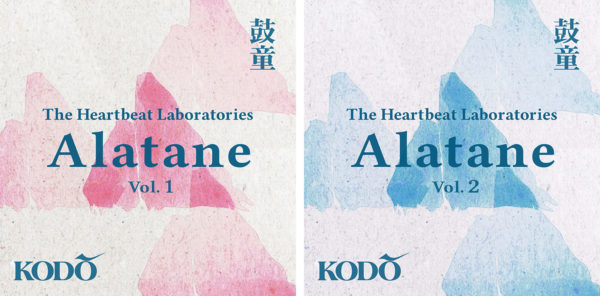
We’ve just released two digital albums: Kodo “Alatane” Vol. 1 and Vol. 2!:クラッカー:
Available on Spotify, Apple Music, and Amazon Music now!

The Heartbeat Laboratories
“Alatane” Vol. 1 & Vol. 2

Featuring: Kodo Taiko Performing Arts Ensemble

◆Spotify
“Alatane” Vol. 1
“Alatane” Vol. 2

◆Apple Music
“Alatane” Vol. 1
“Alatane” Vol. 2

◆Amazon Music
“Alatane” Vol. 1
“Alatane”Vol. 2 

Note: Kodo plans to make these available to creators later this year.

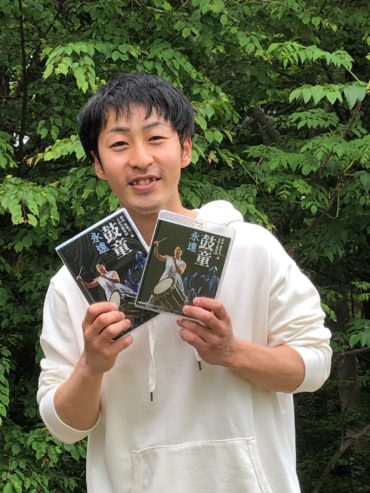
My Kodo Discography Pick 15 | Jun Jidai: Eternity (Blu-ray/DVD)

Jun Jidai


My recommendation is… TA-DA!!!

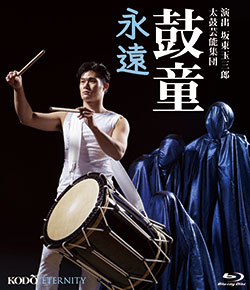
“Eternity” on DVD/Blu-ray!

“Eternity” was released in 2014 and it’s one of our works that was directed by Kabuki actor Tamasaburo Bando.
This DVD is a memento of when I was young and headstrong (I’m still young at heart), with no idea what I was doing (lol).

The scenery depiction in this production is really beautiful.

“From the still of a starry night to the thunderous roar of a raging sea, an array of phenomena weave together to conjure an infinite realm.”

We used over fifty different types of instrument, mainly taiko, to express this grand theme.

This production is also a visual feast, with contemporary dancing, which is rare for Kodo. It’s a different side of Kodo.
A visual Kodo!!!


Available on both DVD and Blu-ray.
I hope this production brightens up your time at home!!!


DVD / Blu-ray | Eternity

↓Learn More and Watch Trailer
https://www.kodo.or.jp/discography/od013014_en.html

↓Listen to Sample Tracks (Japanese)
https://www.kodo.or.jp/discography/od015_ja.html

↓Buy at Kodo Online Store
Blu-ray: http://kodo.shop.multilingualcart.com/goods_en_jpy_78.html
DVD: http://kodo.shop.multilingualcart.com/goods_en_JPY_79.html


Kodo Blog Archive