
“Ready for ‘Michi’ on Sado Island tomorrow!” by Kenta Nakagome
It’s almost time for our hometown performance of “Kodo One Earth Tour 2019: Michi,” here on Sado Island!
We spend most of our time on tour away from Sado. Every time I come back to the island, the beautiful nature and scenery, the food and people, they always clear away any fatigue I brought back from the road. This place resets me.
The longer I live on Sado, the stronger I feel a sense of this island nurturing all of us at Kodo.
Our current touring work takes a look back at Kodo classics and gives us an opportunity to reflect on who we are right now. The cast ranges from veterans to newcomers, so it’s a chance for audiences to discover the appeal of a wide range of generations within Kodo today.
I am grateful to everyone on Sado Island who constantly supports our activities. I’ll put my appreciation into each beat at our performance here.
I hope you’ll join us there on November 20!
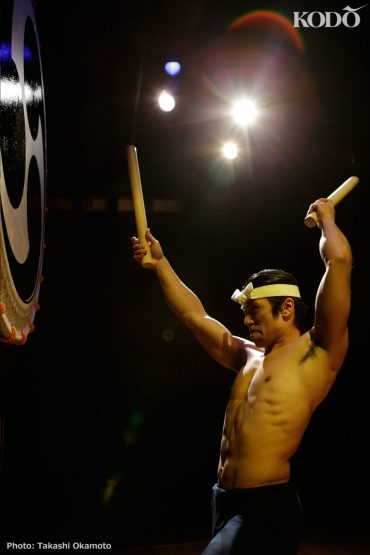
“Kodo One Earth Tour 2019: Michi”Nov. 20 (Wed), 2019 Sado Island, Niigata
 When I was a student, I happened upon this haiku and, for some reason or other, it stayed with me. I used the theme of this poem to compose “Shunpuu.” The haiku is filled with determination that gives the reader a sense of bravery, and even breeziness. I hope people feel powerful and invigorated when they play Shunpuu and when they hear it.